


Vibration, electrical and current signature analysis, each are technologies that can provide a great deal of information on the condition of our electric machines. In this case study an 1800 RPM, 715 RPM, 4000 volt vertical electric motor originally was operated across-the-line as shown in Figure 1. In 2021, the motor was found to have broken rotor bars which were replaced. The machine was retested in 2022 following the repair and was found in good condition with some level of rotor brazing issues as shown in Figure 2.


The following year the motor control was converted from across-the-line to medium voltage VFD as shown in Figure 3. Vibration analysis identified a potential rotor bar issue so it was determined to evaluate with Electrical Signature and Current Signature Analysis (ESA/MCSA).

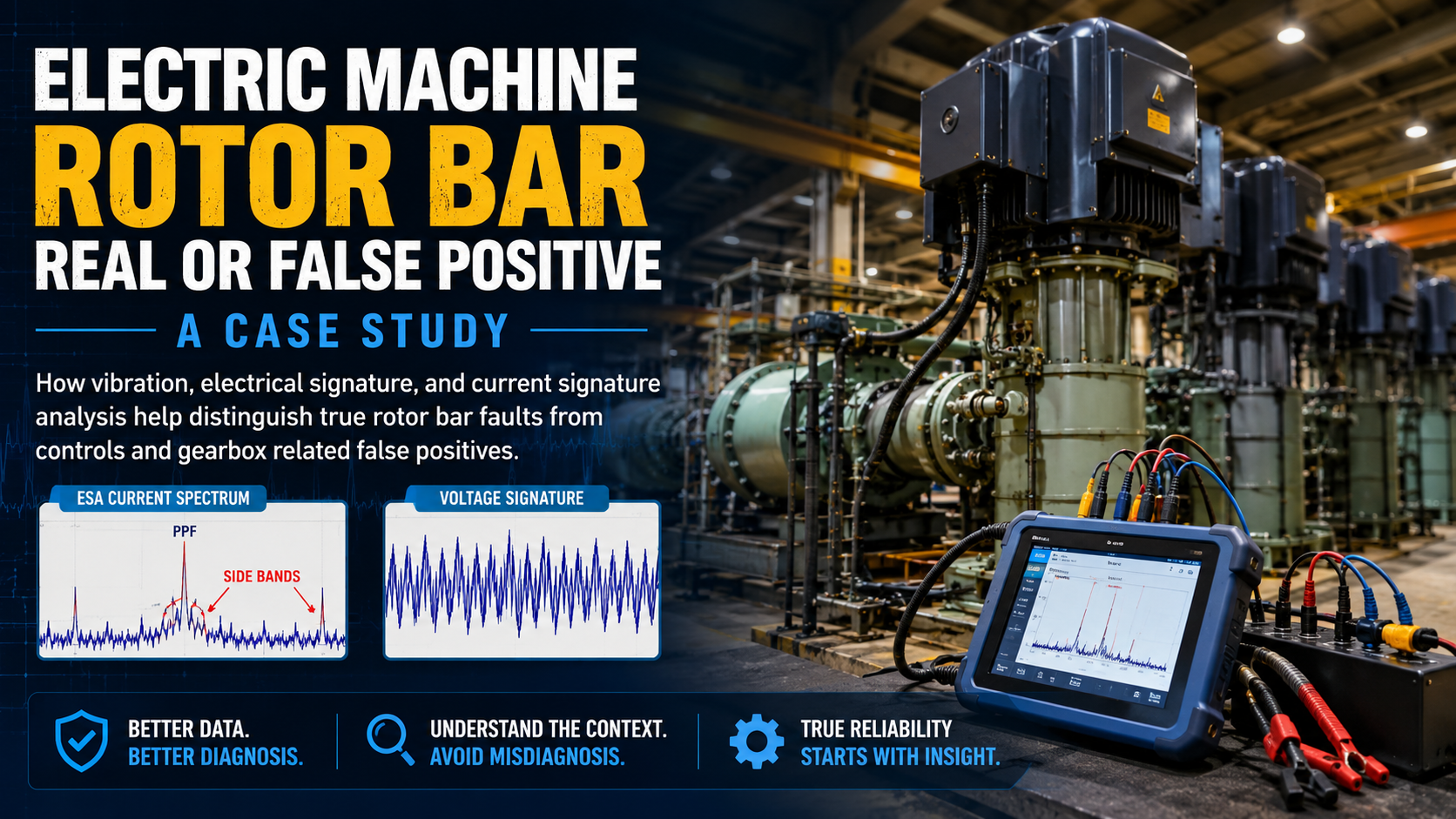
An EMPATH ESA was performed using the back of the relay with current results showing in Figure 4. This shows as a classic Pole Pass Frequency (PPF) around line frequency with harmonics and other signatures including current oscillation showing as potential multiple rotor bars.

We determined that the next step would be to evaluate voltage as shown in Figure 5.

Figure 6 is current only with an EMPOWER MCSA system showing a slightly different version of sidebands in which the first sideband peaks have harmonics that are half the PPF, which would be an indicator of a challenge other than rotor bars.

One of the settings on the VFD is ‘gain.’ In this case the gain was set to high and the sidebands are the result of rapidly varying changes in frequency. These changes are based upon the VFD reacting too rapidly to small variations in pump flow.
The PPF is a common signature for the detection of rotor bars. Paying attention to the condition and results of the data allows you to verify whether or not it is rotor bars or something else such as controls.
A second 4700 hp, 1188 RPM, 4000 Volt wound rotor motor on a rotary kiln with a 38 gear pinion and 318 gears on the kiln. A service company using an alternate ESA system identified potential rotor issues at which point the EMPATH was employed to evaluate the motor rotor and gear conditions. As seen in Figure 7, the PPF and gear issues are roughly the same.
However, the current oscillation is not consistent with the regular pattern of a rotor condition so an inspection of the gears were performed and wear and damage was found to be consistent with the type of signature found.


Just as with any CBM technology, understanding the full context of the equipment being operated is key to ensuring that correct calls are made, especially when considering rotor and rotor bar conditions. In these two case studies, one was a control condition and the second was a gearbox condition in which the problems emulated rotor defects.
About The Author